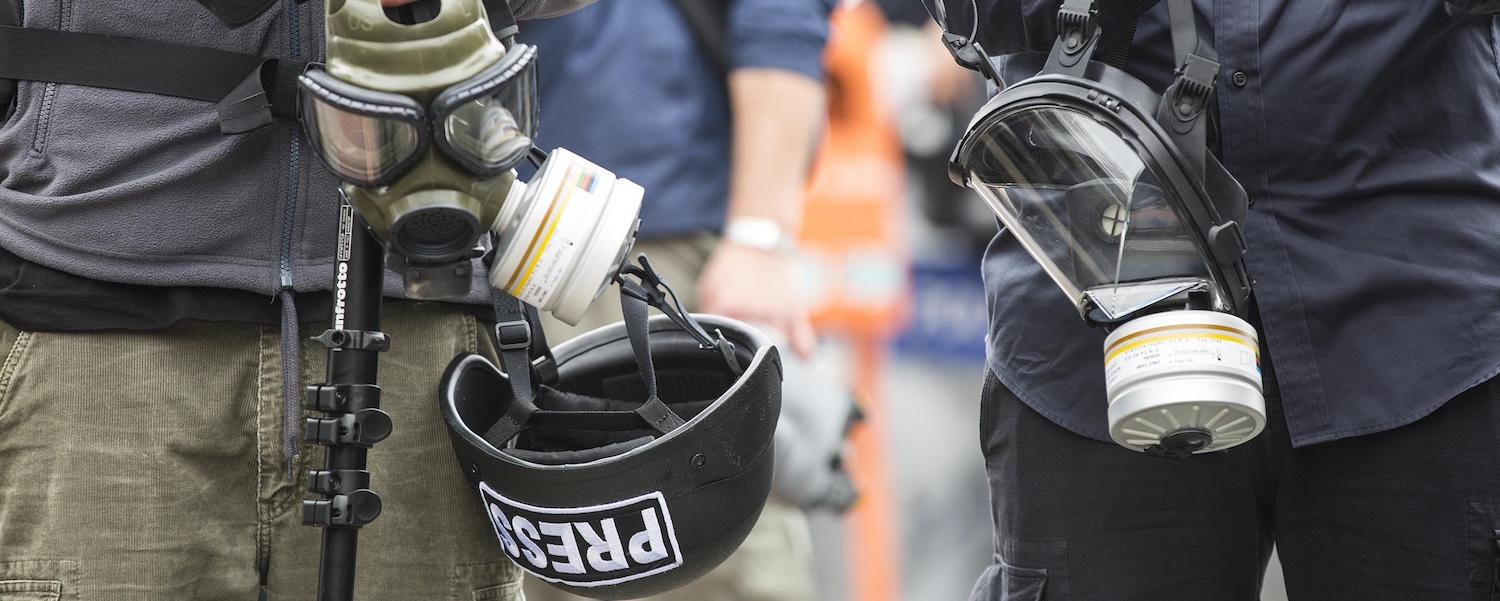
Journalism is not often perceived as an emotionally challenging career, but journalists can experience any number of traumatic stress symptoms from stories that they cover, especially those involving death or human suffering.

These are the topics Gretchen Hoak, Ph.D., associate professor of journalism of Kent State University, explores in her new podcast “Informed Reporting,” which launched March 16.
“Symptoms such as trouble sleeping, anxiety, being overly aware and vigilant, called hypervigilance, being depressed, or being jumpy and quick to anger can develop after journalists cover things that are emotionally tough, like murders, protests, mass shootings and natural disasters,” Hoak told Kent State Today.
Hoak’s research focuses on trauma within the journalism field, specifically how journalists suffer psychologically and emotionally from the stories they cover. But trying to share the research and discussions with those who don’t have traditional office jobs has been a challenge.
“I’ve been kicking around the idea for a while of how to connect working journalists with the research that we do on them,” Hoak said. “Working journalists are really busy, so I settled on this idea of a podcast because I thought it was accessible.”
The focus of “Informed Reporting” is the emotional burden journalists carry while covering stories that leave communities in tragedy.
“I am trying to get a well-rounded view and conversation going about what it is to be a journalist today and some of the challenges and how they can be overcome,” she said.
Many of the guests Hoak will host are former journalists or people who research those journalists. As the podcast gains momentum, she plans to feature working journalists and news managers willing to talk about their experiences and the challenges they face day to day.
“Over time, these symptoms can add up to significant mental and emotional problems that can affect their lives, lead to burnout, and people choosing to leave the job,” Hoak said. “That’s why it’s important to talk about them and see if changes can be made to newsroom policies to help journalists cope better.”
Hoak connects her research to students at Kent State by providing them with real insights on the emotional strain journalists face. Guests on the podcast have covered stories that left them with post-traumatic stress disorders and panic attacks, such as the 2010 Haiti earthquake and the 2016 Dallas police shooting.
“It’s important research because you’re not going to get out of covering stories like that as a journalist,” Hoak said. “So, what I try to do within my teaching is to weave in those elements as I’m teaching my students how to report, here are some of the tougher parts of the job and here are ways to get around it.”
As the podcast gains traction, she hopes other journalism educators will use episodes from “Informed Reporting” as a resource for exploring this side of journalism with their students.
“I’m hoping it becomes a teaching tool for people,” Hoak said. “The stuff I’m talking about is hard to teach. A lot of journalism professors are reluctant to talk about that more emotionally hard part of journalism because they just don’t know how to approach it.”
She plans to continue the podcast when she returns to teaching after her sabbatical and is motivated by the keen interest and excitement shown by the first few guests she asked to record episodes.
“I’m excited about the enthusiasm, and it’s been a lot of fun talking to people and seeing their excitement and being able to share their research and experiences as journalists,” Hoak said. “I want this to be something that I can continue to sustain and to grow and have it continue to be useful and hopefully reach a lot of people.”
During the first episode of “Informed Reporting,” Hoak was joined by a TV producer, and they discussed why the podcast is needed. In the following episodes, listeners can expect to hear journalists’ personal stories, from their experience covering school shootings to natural disasters and the resulting emotional damage.
“Journalism is so dynamic that there are so many different things that we can talk about in terms of being a journalist and the experience,” she said. “There’s just so many ways I can go with it. If people wanted to reach out to me or they had guest ideas or they wanted to be on the podcast, they could email me.” Comments can be sent to informedreportingpodcast@gmail.com.
“Informed Reporting” also has an account on Instagram where the podcast is promoted and where Hoak gains connections with other journalists and organizations.
“This is something that people could use and hopefully start those conversations around those harder parts of journalism that in general people tend not to want to talk about,” Hoak said.
Listen to the podcast on Apple Podcasts or Spotify.