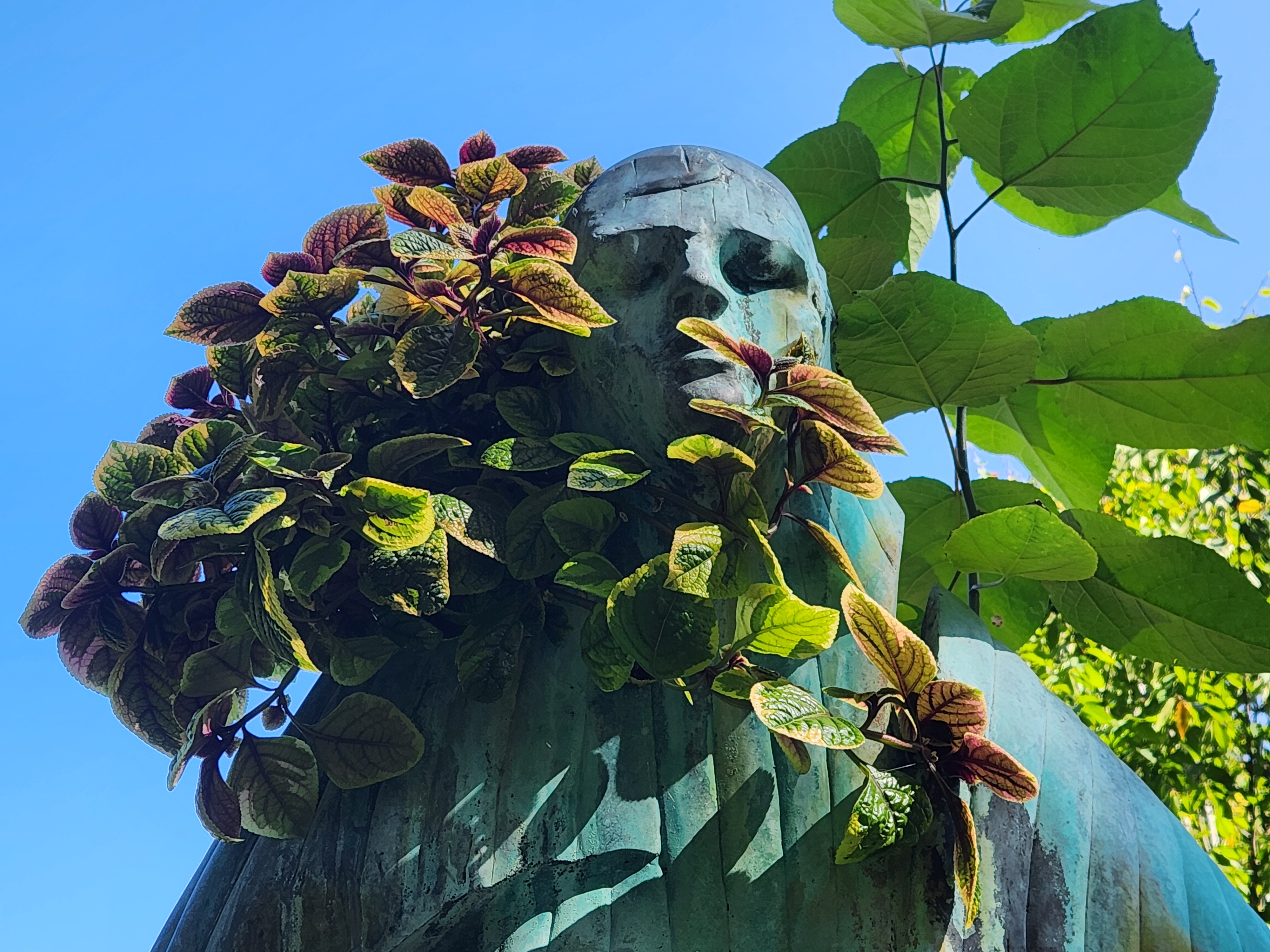
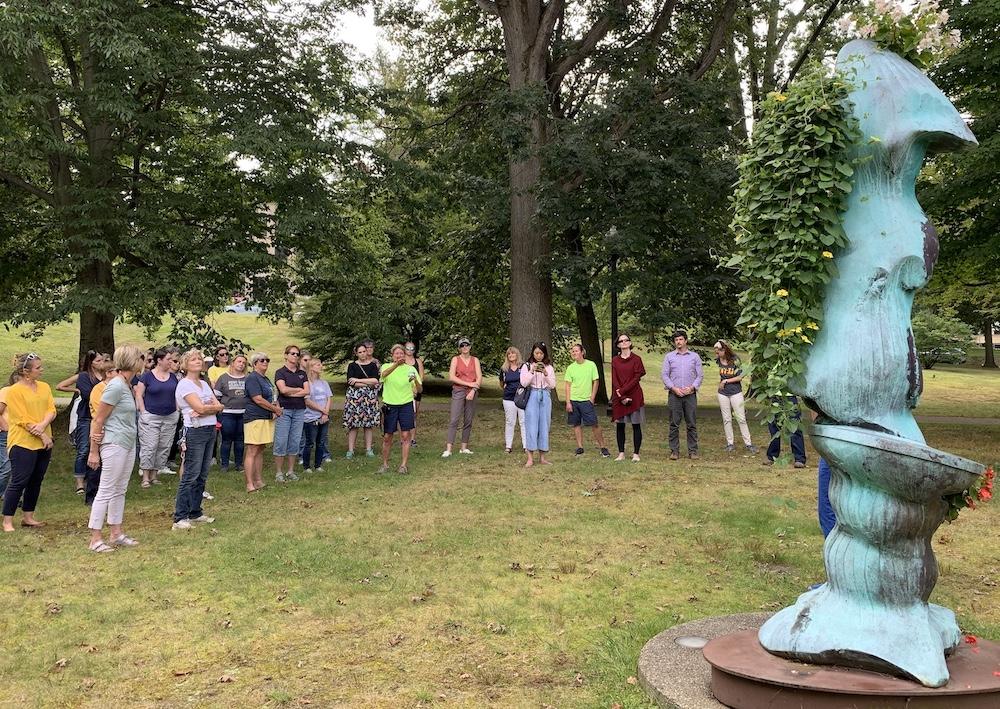
In the greenery behind Rockwell Hall on Kent State University’s Kent Campus, another green landmark can be found – a patinaed, bronze statue, alive with growing plants inside it.
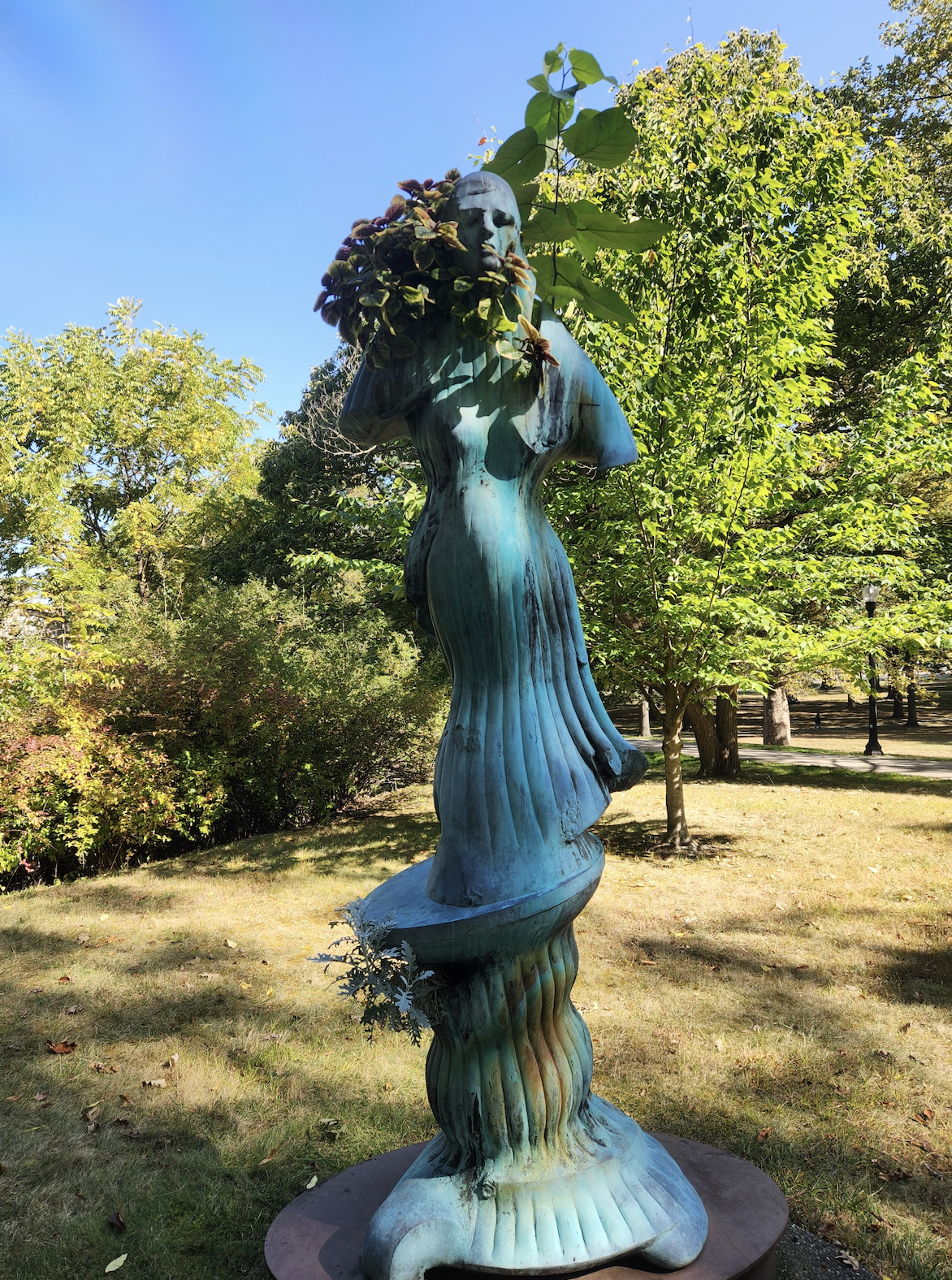
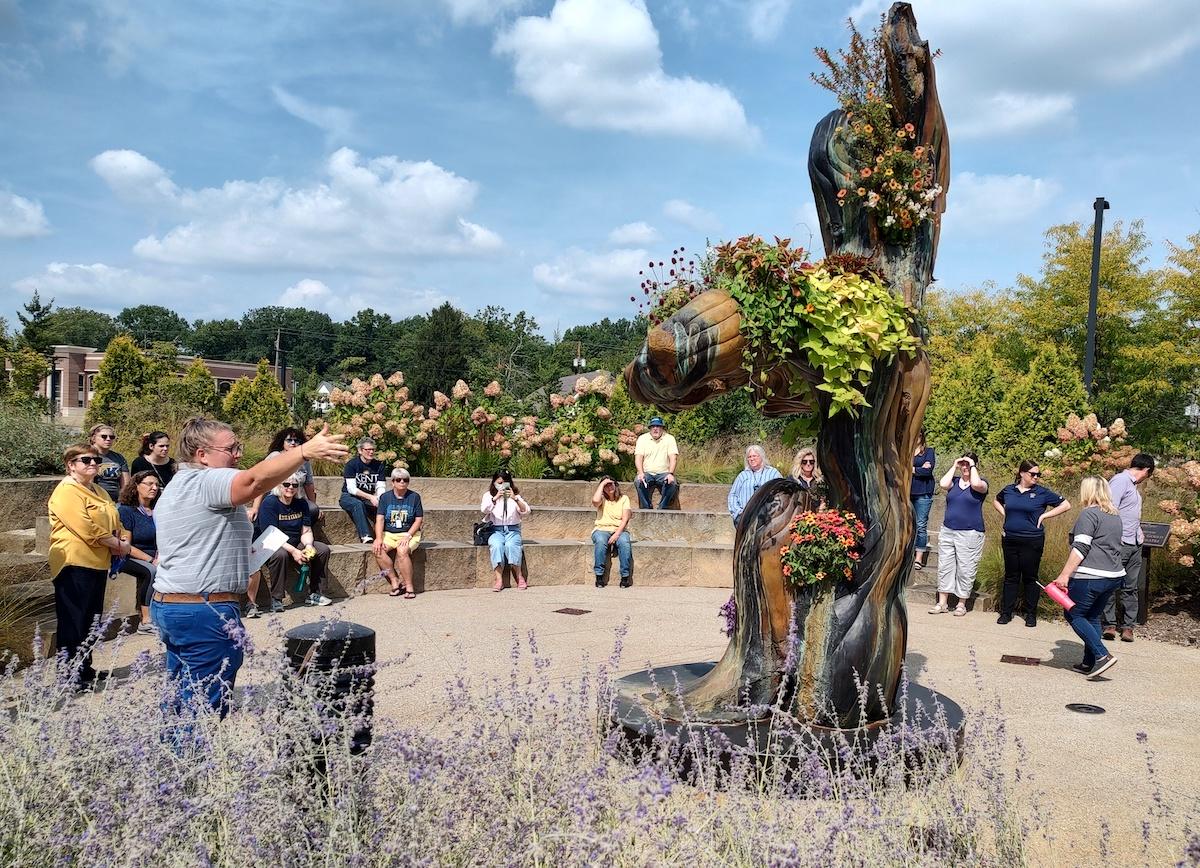
This living sculpture, “Sidney,” was created in 1972 by Robert Wick in memory of his first wife, Kent State alumna Sidney Barnes Wick. Another living sculpture, “Seated Earth” by Wick is the centerpiece of the Wick Poetry Park behind the Wick Poetry Center, inside the historic May Prentice House.
In 1984, Robert Wick, a sculptor and former art department faculty member at Kent State, and his brother, Walter Wick, established what is today known as the Wick Poetry Center in memory of their sons Stan (1962–1980) and Tom (1956–1973) Wick.
Robert Wick said, “Out of painful beginnings, my brother Walter and I have found great meaning in … the success of Wick Poetry and the future of young poets.”
The Many Seasons and Challenges of a Living Statue
“Sidney” was moved to Kent State from New York in 2012. The installation was designed to hold pockets of soil so that it could incorporate numerous plants and be a true, living tribute.
Wick said, “The eyes of the figure are not closed to death – they are closed to dream.”
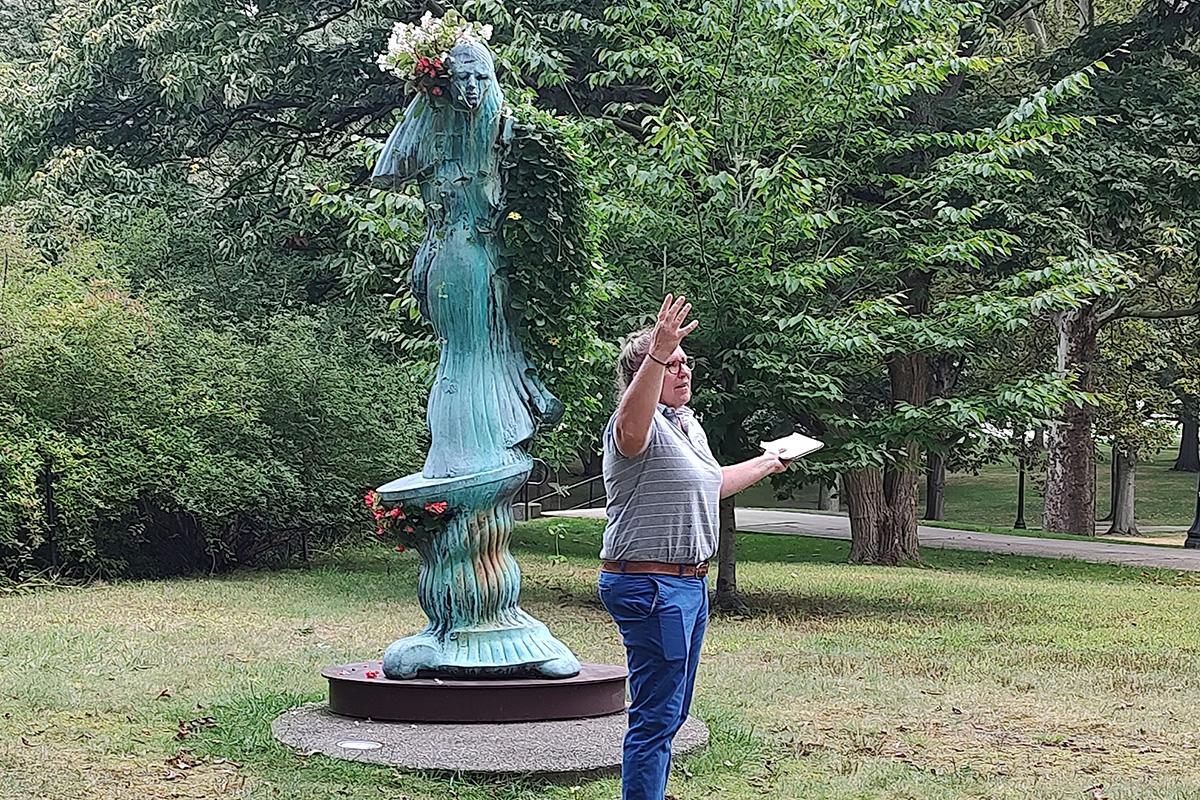
In the spring, members of Kent State’s grounds crew add new plants to the sculpture. By the summer months, the plants and flowers inside the statue are in bloom, filling it with life.
“I have a soft spot for both ‘Sidney’ and ‘Seated Earth’ because we interact so closely with both each season,” said Rebekkah Berryhill, grounds manager for University Facilities Management at Kent State. “Sidney’s presence is almost veiled in her environment, and we choose plants that are understated and flow down her form. We don’t choose plant material that is loud or super showy.”
Because the pockets of soil are shallow and the statue can get hot when the sun hits it, finding the right plants that will thrive in those conditions is a challenge. “The pore space that’s needed sustain plants (the roots and soil) over a long period, combined with temperature fluctuations really limits what we can keep alive,” Berryhill said. “If we were in a different growth zone, we could probably plant some cool succulents that would survive in the limited amount of soil.
“I would be curious to know if the selection of plant choices by me and my staff align with the vibe that others have of the spaces, or if we are steering folks to feel a certain way that might make them feel conflicted,” she said.
How to Meet Sidney
“Sidney” is part of the Art Walk of outdoor, public art on the campus of Kent State and throughout the City of Kent.
Visitors are invited to discover this spacious, outdoor gallery in person and online.