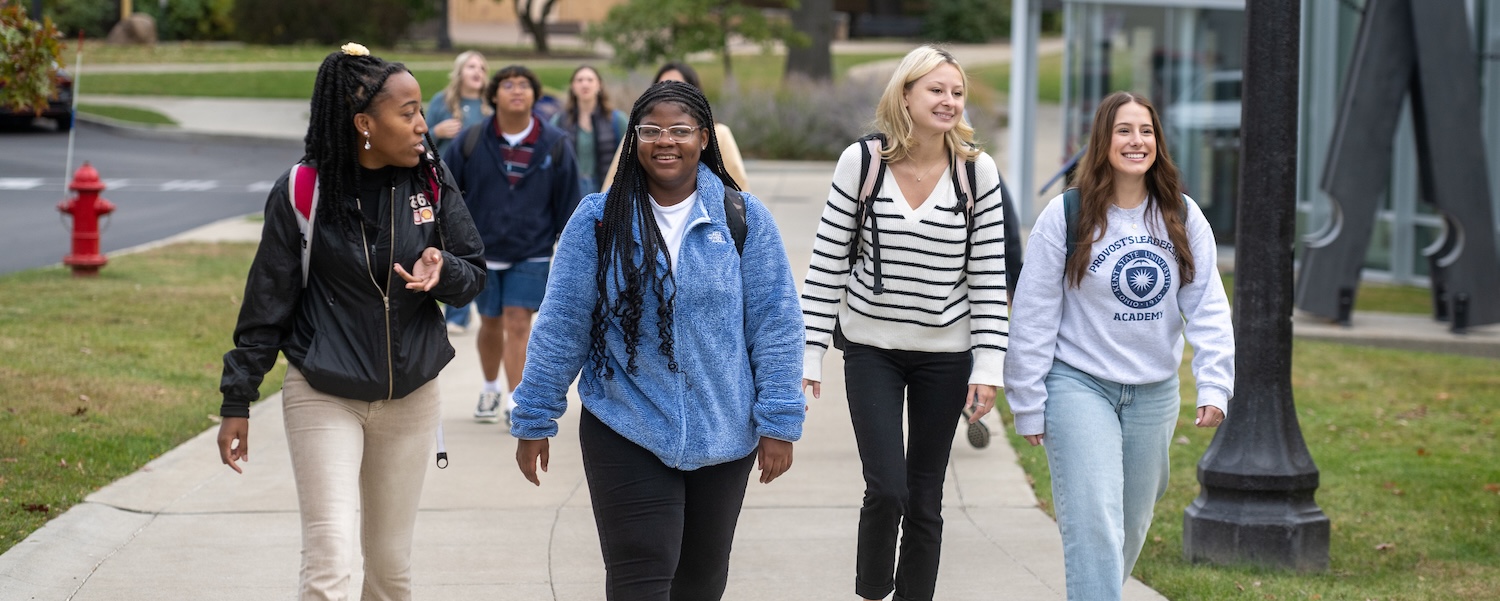

When Yeshe Mulugeta, a senior criminology and justice studies major from Washington, D.C., arrived at Kent State University, she expected the transition to be challenging, but not overwhelming. By the end of her first year, she fell behind academically and was unsure where to turn.
“Adjusting from high school to college is really hard,” Mulugeta told Kent State Today. “My high school didn’t prep me enough for the workload, and I didn’t do well in one of my science credits.”
A staff member suggested she look into the Summer Advantage Program. She applied, was accepted and, without realizing it, stepped into what would become one of the most defining parts of her Kent State experience.
“I’ve done Summer Advantage every summer since I started here,” Mulugeta said. “I applied after my freshman year, and I was like, ‘Oh my God, I love this.’”
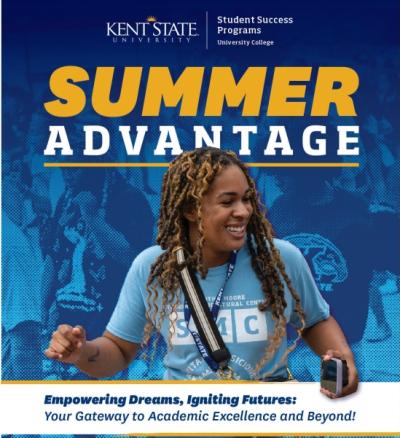
Kent State University’s Summer Advantage Program has grown into a powerful support system for students who need an academic boost, financial literacy or a stronger sense of belonging as they move through college. For the last nine years, the program has expanded its reach and impact, and for many students, it has become a defining part of their Kent State experience.
The program was created after institutional data revealed that second-year students could benefit from continued support in their transition to Kent State and is overseen by Melanie Jones, director of Student Success Programs in Kent State's University College.
“In your first year, you’ve got your Flashes 101 class and a lot of intentional communication,” Jones said. “We noticed that when students got to their second year, some of that dropped off.”
How students join
Mulugeta’s path into the program mirrors that of many students who are invited to apply based on academic progress and financial need.
Jones said the goal is to reach students who would benefit most.
“We look at students who are the most in need,” Jones said. "If a student isn’t quite at the credit hour mark they need to reach the next class status, if they’re first-generation or if they have financial need, those are the metrics we use.”
Once invited, students must complete their FAFSA to apply for tuition assistance, choose a three-credit summer course that applies to their degree and finalize their fall schedule if they are not graduating seniors.
Once students complete all those items, they are notified if they have been selected for the program.
For Mulugeta, who is also a first-generation student, the invitation arrived at exactly the right moment.
“It gave me the ability to catch up,” she said. "And it helped me take courses so my schedule during the year wasn’t too heavy.”
Flexible participation options
As student needs have evolved, so has the program, something Mulugeta appreciated as she balanced coursework, work and life.
“We’ve evolved to afford students the opportunity to participate in multiple modalities,” Jones said. “Students can take an online course, attend virtual workshops or choose in-person options if they want that community. We typically offer an in-person as well as a virtual orientation.”
That flexibility allowed Mulugeta to stay on track each summer, no matter where she was.
“I liked that I could still take a class even if I went home,” she said. “It made it easier to keep moving forward.”
Workshops and campus partnerships
Beyond coursework, students complete four engagement activities, choosing from workshops on wellness, financial literacy, academic success and career development.
Jones said these sessions are designed to give students tools they can use immediately.
“We always say these three pillars: being academically successful, financially sound and having their well-being intact,” she said. “We invite colleagues from Kent State of Well-Being to talk about wellness and strategies students can use to remain well during their time in the residence halls and their time on the campus.”
Financial literacy is another major focus.
“We’ve had presenters talk about the ins and outs of scholarships, grants and loans, and what it looks like to manage your finances during this time of your life,” Jones said.
Other partners include the CARES Center, Career Exploration and Development, Student Scholarships and Financial Aid and the Writing Commons.
For Mulugeta, the workshops became a reliable source.
“They were really beneficial and helped me grow,” she said. “They covered different topics where I needed a little more growth, not just academically, but as a person.”
Finding community as a first-generation student
As a first-generation student, Mulugeta said Summer Advantage connected her to people and resources she didn’t know existed.
“I really needed all the support I could get, and I met people who knew how to guide students like me,” she said.
One of the most meaningful relationships she built was with a staff member in the Student Success Programs.
“I met Miss Pamela my freshman year, and she always gives really good advice,” Mulugeta said. “Because I did Summer Advantage, I saw her throughout my three years here. That relationship really helped me.”
Those connections, she said, shaped her entire college journey.
“They want you to grow,” she said. “I’m getting advice about how to get through college, and now I’m getting advice about grad school. It feels like a genuine relationship.”
Program growth and future goals
The program expanded significantly in 2021 after the pandemic revealed greater student need.
“We learned there were more students who needed this opportunity than we realized,” Jones said.
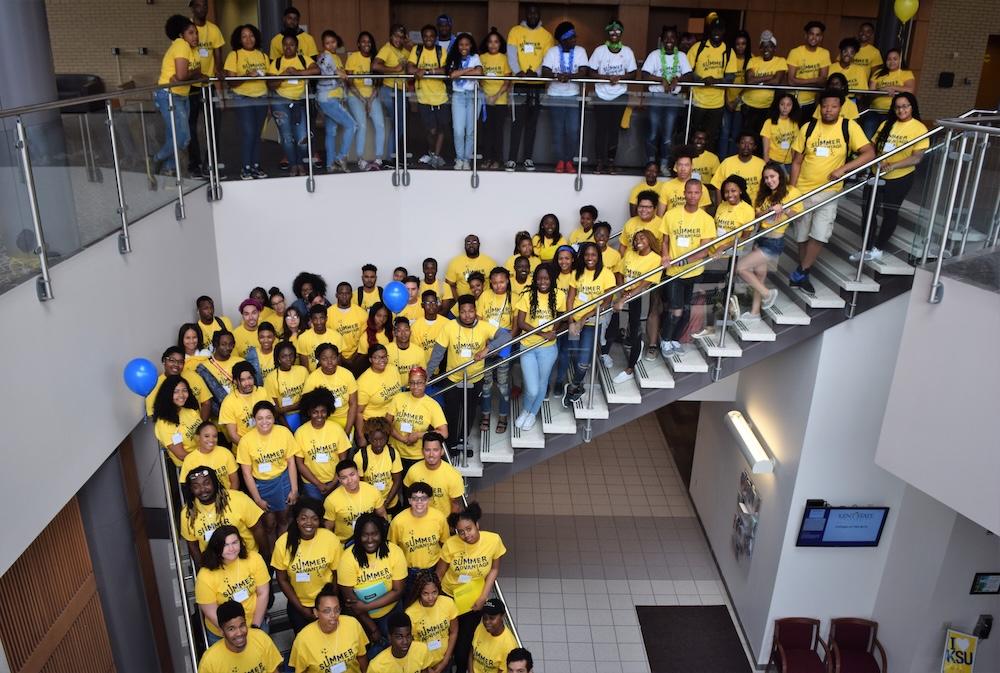
The program now offers around 250 spots each summer, with about 200 students participating. More than 1,500 students have taken part over the last nine years.
“It’s accessible, it’s welcoming and it’s doable,” Jones said. "We’ve created a system that works for a lot of students.”
Looking ahead, Jones hopes to expand the program further, including deeper collaboration with academic colleges and faculty.
“One dream is that each academic college could have its own mini–Summer Advantage program,” she said. “Another is creating a communication system with faculty to close gaps for students who hit bumps in their summer courses.”
Recognition and impact
The program has earned multiple awards for its success, something Jones said reflects both its impact and its potential.
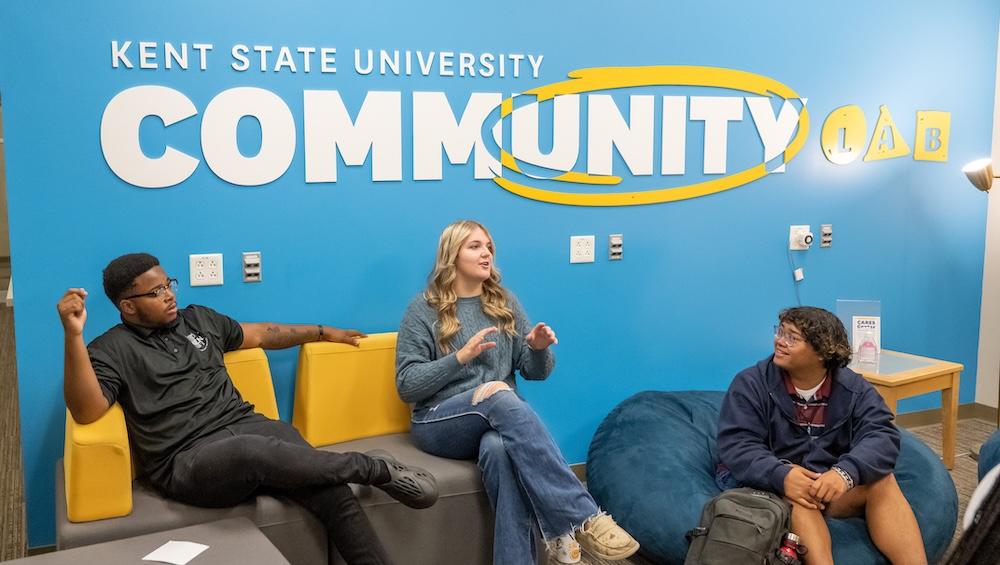
- 2026 NASPA Excellence Award - CommUNITY Lab was selected as the Gold Award Winner for the Equity, Inclusion, and Social Justice category.
- 2026 NASPA Excellence Award - Summer Advantage was selected as the Gold Award Winner for Enrollment Management, Financial Aid, First-year, Other-year, Orientation category.
- 2026 NASPA Excellence Award - CommUNITY Lab was selected as the Grand Gold Award winner.
- 2026 NASPA Excellence Award - Summer Advantage was selected as the Grand Silver Award Winner.
- Summer Advantage Receives 2025 NASPA Collaboration Award
"It’s an honor and a privilege to be recognized,” Jones said. "The program genuinely works for students in a way that helps them have transformational experiences.”
She said the recognition also shows other universities what is possible.
“We’re able to demonstrate how other institutions could mirror this opportunity,” she said. “Those awards demonstrate our expertise in crafting a program that works and makes a real impact.”
This work builds University College’s long and storied record of national recognition for student success, a legacy reflected in multiple awards earned over the years.