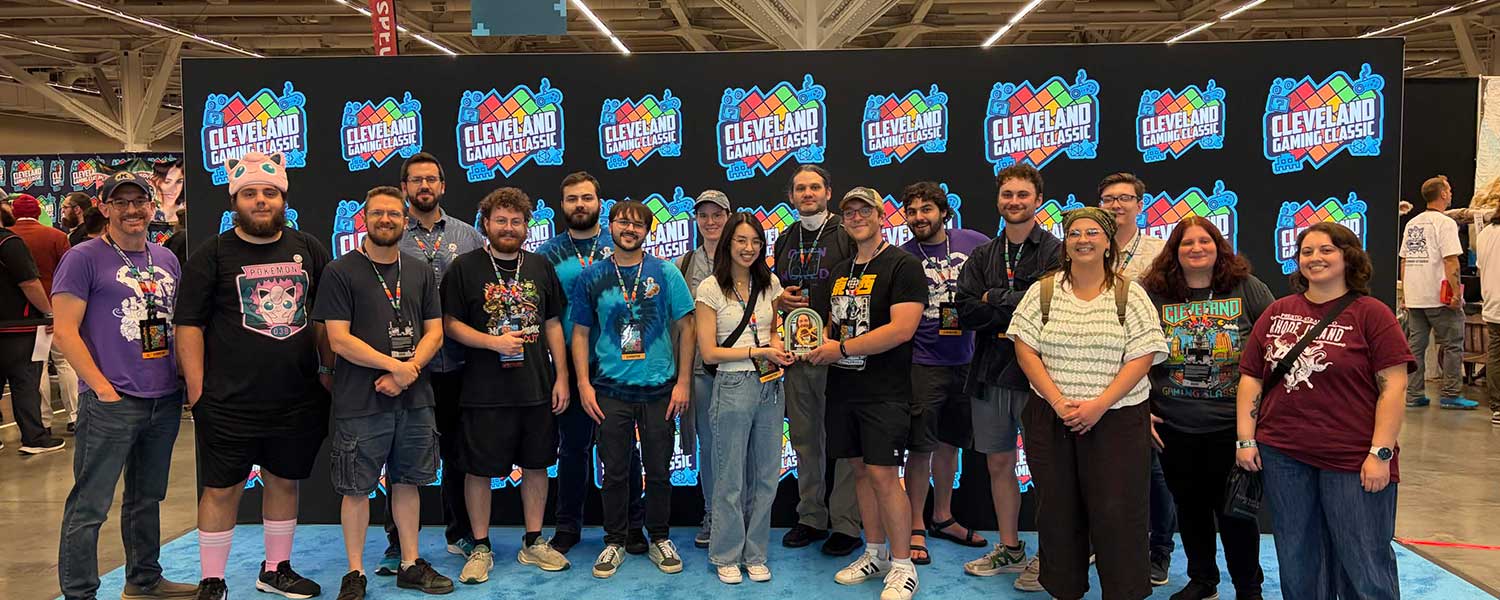
Students, faculty and alumni use the annual convention to test work with audiences, build community and connect classroom projects with professional opportunities.
For students studying game design, creating the work is only part of the process. The other part begins when someone picks up a controller, sits down at a computer or otherwise experiences a game for the first time.
That interaction is one reason Kent State University’s Animation Game Design (AGD) program, now part of the School of Art continues to participate in the Cleveland Gaming Classic, an annual gaming convention and independent game festival that brings developers and players together in Cleveland.
“Games are artworks that are not really ‘complete’ until someone plays it,” said Chris Totten, M.Arch., associate professor and program coordinator of Animation Game Design. “Having live audience reactions helps you know that your game is achieving its goals, whether that is to make something commercial, expressive, experimental or some combination of all of those.”
Kent State’s AGD presence at the Cleveland Gaming Classic (CGC) began in 2022 with a booth and has grown broader ever since. The program has presented student games and short films, alumni have returned with booths for independent projects, and faculty have organized game development panels with other universities and professionals.
For Totten, those opportunities complement what happens in the classroom.

Classroom critiques allow students to discuss projects with other designers using professional terminology and approaches. Public exhibitions introduce another perspective, the experience of the player.
That distinction is especially important in games, where the player’s experience is part of the work itself. Seeing where players engage with a game, encounter difficulty or respond in unexpected ways gives developers information they can take back into the development process.
From Kent State projects to independent games
The progression from learning to professional practice was evident throughout this year’s CGC. Four projects with Kent State faculty, student or alumni connections were part of the event’s indie game offerings:
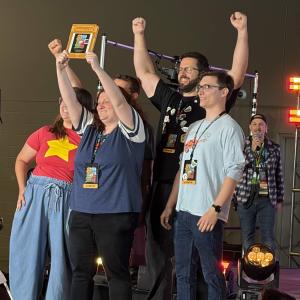

- “Soul Spires: Initium” — Developed by Square Table Games, the 3D fantasy action game is the work of a studio founded by Kent State Animation Game Design instructor Turan Koptur. Kent State students and alumni have contributed to the project, which received the Cleveland Gaming Classic’s Best Graphics award this year.
- “Little Nemo and the Nightmare Fiends” — The hand-animated 2D adventure is being developed by Team Nemo, which Chris Totten, M.Arch., co-founded with other game industry professionals. Kent State alumnus Max Kunze joined the core development team in 2024, and Animation Game Design students have contributed through the program’s internship course. The project received the Most Fun award at this year’s CGC, along with a $500 honorarium recognizing the developers’ contributions to the convention community.
- “Our Town” — The 3D mystery game began in Kent State’s Animation Game Design Game Project course and continued beyond the classroom through Fish Truck Studios. Kent State Animation Game Design alumni involved with the studio include Grayson Jones, Drew McDowell, Cassandra Nguyen, Sarah Reen and Sam Vogel. Animation Game Design instructors Tim Fritz and Justin McCrea have also contributed to the project as project management consultants. The studio has also hosted Animation Game Design students through the internship course, and “Our Town” received the Audience Choice Award at GDEX in 2025.
- “Notebook Knockout” — Developed by Paper Frog Studio, led by Animation Game Design alumni Riley Fulks, Alec Reihner and Stevie DiGiacomo, the tabletop card game represents another path for alumni continuing creative work beyond Kent State. The project was supported through a successful Kickstarter campaign and received Best in Show recognition at the Cleveland Gaming Classic in 2024.
For Totten, recognition at festivals and conventions can change how students and emerging developers present their work professionally. “The awards carry a lot of weight for us because they’re acknowledgement of our work by our industry peers,” Totten said.
For a student, he said that recognition can help transform a project from an assignment completed for a class into work that has been presented and recognized outside the university. The Animation Game Design program incorporates that process into its courses by helping students prepare materials to submit their work to game festivals and other opportunities.
Supporting the next step
The Cleveland Gaming Classic has also created another opportunity for Animation Game Design students through scholarships.
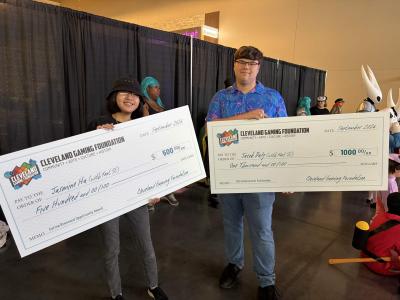
Through the Cleveland Gaming Foundation’s scholarship program, the foundation determines the scholarship awards and amounts, while Kent State’s Animation Game Design program selects the Kent State students who receive them. This year, Animation Game Design senior Jacob Daly received the $1,000 CGC Achievement Scholarship, while senior Jasmine Ha received the $500 Carina Brennand Opportunity Award.
Totten said the additional funding can help students purchase equipment and prepare to begin their careers. When selecting recipients, the program considers more than the quality of a student’s work.
“When selecting for the awards, we look for students who not only do good work, but who also are positive contributors to their teams and community,” Totten said. That emphasis on community extends beyond the scholarships. “Community is everything in game development,” Totten said.
While the industry can be competitive, he said professional communities can help developers find collaborators, make connections with studios, discover project opportunities and find support from others working in the field. Totten has participated in game development communities in Ohio and beyond and said he wanted students at Kent State to have access to a similar environment.
The continued interaction among Kent State students, faculty and alumni at events such as the Cleveland Gaming Classic offers one measure of that effort. Alumni continue to collaborate on independent projects, work with current students and reconnect at industry events even as their careers take them into different areas of game development and related fields.
It also demonstrates that participation in the game industry does not have to begin or end in traditional industry centers on the West Coast. Kent State graduates are developing independent projects, contracting with studios and contributing remotely to commercial games while remaining connected to Ohio’s game development community.
That engagement continues beyond Cleveland. Animation Game Design faculty, students and alumni are participating in other professional events, including GDEX in Ohio and the International Conference on Meaningful Play in Pittsburgh. Those experiences provide additional opportunities to present projects, attend professional talks and meet others working across game development, education and research.
For Kent State students, each event extends the development process beyond an assignment or a classroom. It places their work in front of players, peers and professionals and gives them another opportunity to understand how their work functions in the community it was created to reach.
For more information about Kent State University’s Animation Game Design program, including degree options, curriculum and opportunities for students, visit the School of Art’s Animation Game Design webpage.
Banner Image - Kent State Animation Game Design faculty, students and alumni at the Cleveland Gaming Classic