
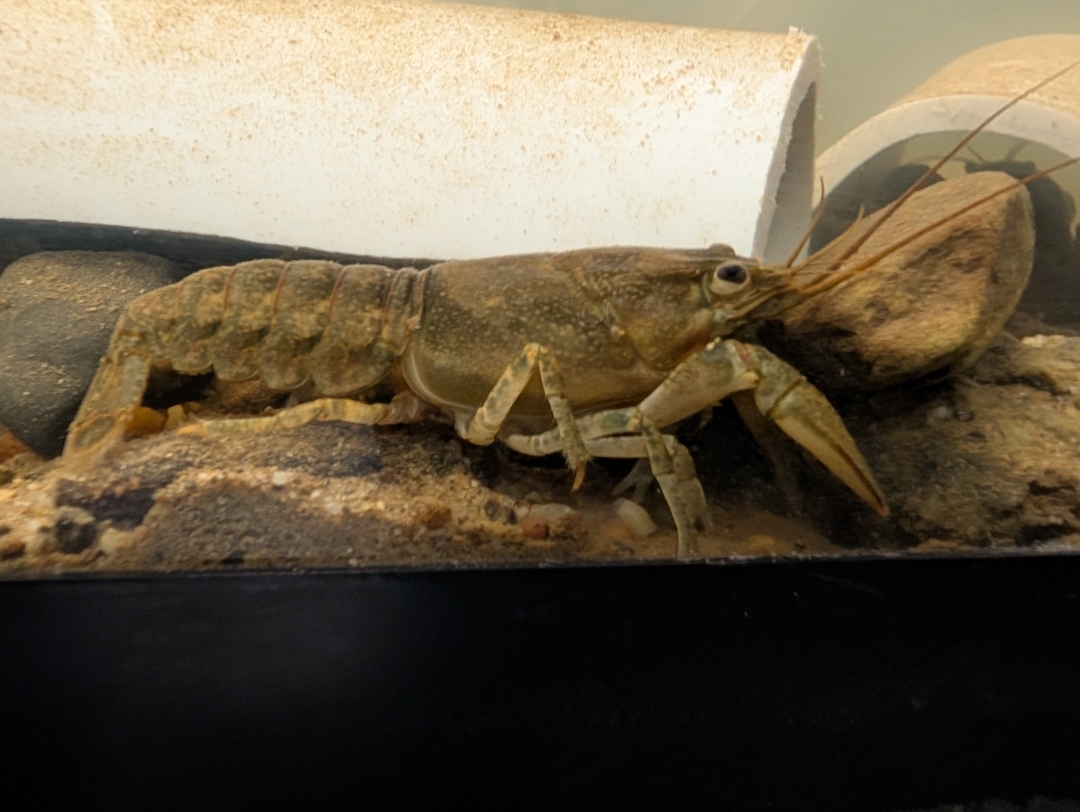

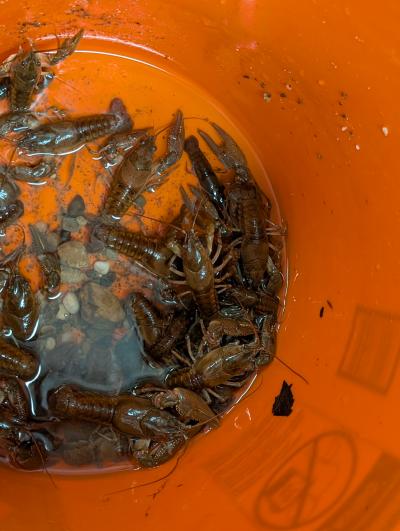
For Amanda Yokley, participating in Kent State University’s Summer Undergraduate Research Experience (SURE) Program provided an opportunity to expand her scientific perspective while developing skills that will support her pursuit of advanced education. Supported by the Kent State Environmental Science and Design Research Institute (ESDRI) and mentored by Jean Engohang-Ndong, Ph.D., Department of Biological Sciences, Yokley spent the summer investigating an ecological question at the intersection of animal biology, microbiology, and antibiotic resistance. Specifically, “My project is investigating how the uptake of antibiotic-resistant bacteria alters the gut microbiomes of crayfish and whether that antibiotic resistance persists long-term in the guts of crayfish.”
The project gave Yokley an opportunity to explore an area of research that differed from much of her previous academic experience. Her background has largely focused on animals and whole systems, while this project introduced her to microbial and genetic research techniques.
“I learned a lot about important microbial and genetic tests/techniques that I hadn't had experience with before. As a lot of my academic experience is animal-focused, this project allowed me to develop a better understanding of the microbial side of things and an appreciation for the role that microbes play in ecological questions.”
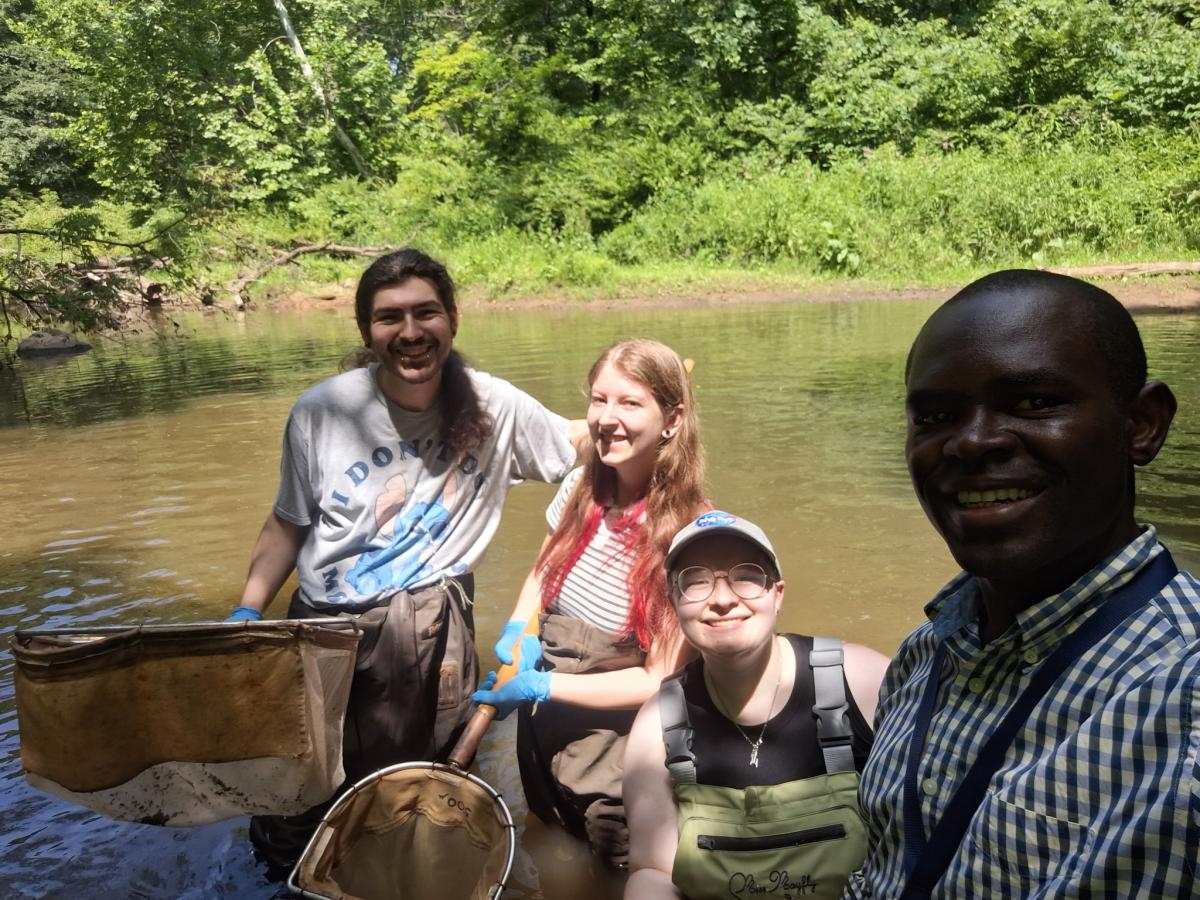
Learning to work across disciplines was also one of the challenges Yokley encountered during the SURE program. Moving from an animal- and whole-system-focused background into research involving microbiology required her to adapt and identify how her existing strengths could contribute to an interdisciplinary team.
Rather than viewing that learning curve as a setback, Yokley saw it as an important part of her preparation for future research. She shared, “Luckily, the collaborative abilities I developed will prove very useful as I continue in my studies, as ecology is a highly interdisciplinary field and I will be able to start my next research adventure with the right foot forward.”
ESDRI’s support also provided a sense of accountability and encouragement throughout the project. While Yokley said the Institute’s support did not substantially affect the research itself, she stated “I think the periodic check-ins about the project kept me on track and made me feel less like I was researching into the void, so to speak.”
For Yokley, the SURE experience ultimately provided an opportunity to grow both as a researcher and as a collaborator. Her work with crayfish, gut microbiomes, and antibiotic resistance introduced her to new scientific techniques while broadening her understanding of the microbial processes that contribute to ecological questions.
Reflecting on the program, Yokley said, “I really enjoyed my time in the SURE program. It was very fulfilling and allowed me to develop important skills that will help me as I pursue advanced education in my field.”
Yokley was recently accepted into the ESDRI Undergraduate Fellowship Program, so will be continuing her research and career journey with more support from the Institute.