Making the grades. Meeting the needs. Exceeding expectations.
A steady flow of job-ready nursing graduates from Kent State University’s regional campuses is meeting workforce demand in local healthcare systems and contributing to a greater quality of life throughout the region, including underserved rural communities.
Offering multiple accessible pathways into nursing careers throughout Northeast Ohio, the more intimate regional campuses support students in an environment of affordability, flexibility, and accessibility that helps them juggle the demands of studies, work, and adult life.
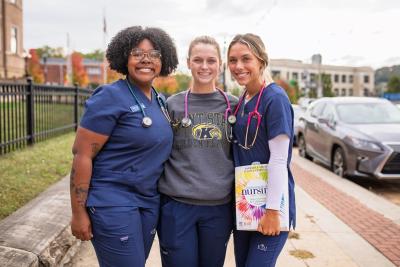
The results defy larger trends for recent college grads. Against a backdrop of rising costs, a sluggish job market, and stagnant salaries nationwide, Kent State’s nursing programs are producing highly trained registered nurses who enjoy immediate employment, long-term advancement, and meaningful service to their communities upon graduation.
Workforce Readiness & Job Placement
Generally, the national unemployment rate among recent graduates aged 22-27 is at a four-year high.* And yet, most newly pinned nurses from Kent State’s regional campuses received competitive job offers with premier healthcare providers in Northeast Ohio well before commencement day.
Kent State is a leading economic driver in the region, offering distinctive programs that prepare students for the most in-demand jobs, particularly in nursing. Considering widespread job openings for RNs, Kent State’s newly pinned RNs have their choice of where to work, with 99.6 percent employed within six months of graduation. New nurses continue to be in high demand as the aging population requires more healthcare services and existing nurses retire. Overall employment for RNs is projected to continue growing significantly faster than average job growth nationwide through 2030, due to the ongoing nursing shortage.**
Uniquely positioned to respond to this healthcare need, Kent State boasts the largest BSN program in Ohio, as well as a growing ADN program. In the 2025-26 academic year, enrollment in the College of Nursing increased by 9.8%. Nursing was also the number one major among first-year students who are attracted to Kent State’s College of Nursing, which ranks among the top nursing schools nationwide.
This strong nursing program is welcome medicine at a time when nursing shortages often mean higher patient-to-nurse ratios, longer wait times, increased employee burnout, and potential risks to patient safety and quality of care.
Regional Exceptionalism
Each regional Kent State campus plays an outsized role in equipping nursing students with in-demand skills to meet Northeast Ohio’s healthcare needs.

Four locations offer two-year Associate Degree in Nursing (ADN) programs: the Ashtabula Campus, the East Liverpool Campus, the Tuscarawas Campus, and the Twinsburg Academic Center (TAC). Each program has its own ADN director, collectively coordinated by Regional Program Administrator Mariann Harding, PhD, at the Tuscarawas campus.
Geauga, Salem, Stark, and Trumbull campuses offer four-year Bachelor of Science in Nursing (BSN) degree programs. Campus coordinators manage the BSN program at regional locations with oversight from Tracey Motter, DNP, MSN, RN, Associate Dean of Academics and Interim Dean of Kent State University College of Nursing.
During the 2025-2026 academic year, the regional campuses graduated a total of 242 new registered nurses.
“Kent State’s regional campuses are intentionally and strategically located in Northeast Ohio’s rural communities to increase access to higher education among our residents,” says Dr. Angela Spalsbury, Dean and Chief Administrative Officer at Kent State Geauga and Interim Associate Vice President for the Regional Campus System. “Our graduates are a vital workforce pipeline for critical healthcare facilities in these areas.”
Each nursing graduate must pass the National Council Licensure Examination (NCLEX-RN) to become a certified registered nurse. The pass rate among ADN (TAC) and BSN (Burton campus) grads remains well above state and national averages, with a 100% pass rate among local BSN grads for the first quarter of 2026.
Hands-On Learning & Clinical Preparation
These local nursing graduates are well prepared for the high-demand RN roles waiting for them.
As part of Kent State’s broad commitment to nursing excellence across the regional campuses, nursing labs have been upgraded with state-of-the-art resources, including computerized mannequins and AI and VR technologies, so students can practice clinical simulations in realistic scenarios to apply their knowledge, critical thinking skills, nursing judgment, and hands-on technical skills.
Thanks to partnerships developed with hospitals, clinics, and extended-care facilities throughout the region, students also gain valuable in-person clinical experience.
“The nursing curriculum provides students with opportunities to explore areas of interest through clinical experiences in specialty areas, including critical care, psychiatric mental health, community health, and maternal and newborn nursing,” says Senior Lecturer Kerry Myers, MSN, RN, OCN.
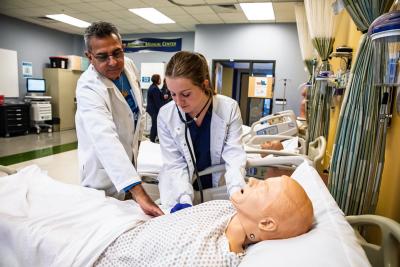
TAC’s ADN Nursing Director Amy LePard, MSN, RN, adds, “99% of our students secure employment in their chosen field even before they graduate, receiving job offers within the Cleveland Clinic, UH, Summa Health, and Metro networks, at children’s hospitals, emergency rooms, obstetrics units, intensive care units, and every other healthcare specialty where registered nurses are needed. There is no shortage of jobs for well-prepared nurses.”
Kent State’s nursing programs attract caring, compassionate individuals who want to make a positive difference in the lives of others in their communities.
Regional campus nursing students are prepared with the clinical skills, critical thinking, and necessary knowledge to ensure safe, high-quality care, Myers says. “Most of our graduates work in acute care inpatient settings, many of them in hospitals within their own community.”
“These students graduate prepared for a solid career,” LePard adds. 'They are equipped to give back to their communities in valuable ways.”
Affordability, Access, Support & Flexibility
Regional campus students receive an excellent, affordable college education that is conveniently close to work and home.
Offering significant cost advantages over a four-year residential campus, Kent State’s regional tuition costs are approximately 47% lower, saving students thousands annually. Regional nursing students can also apply for scholarships that remove remaining financial barriers, allowing them to better focus on their studies.
“The current college student is working to pay their own way through college, so the regional campus is the best way forward for today’s nursing student who needs to work while going to school and requires a more affordable college education,” LePard says.
Flexibility is also key. Regional campus nursing programs are designed for working adults managing busy schedules, financial pressures, and family or job responsibilities.
LePard says that the two-year ADN program is an accessible entry point for many nursing students who manage their work schedules around three to four days of classes and clinical experiences. “The associate degree program provides a way for students to focus on nursing and get through college quickly. This helps them to secure a job at a healthcare system, which then may pay for them to get their Bachelor of Science Degree in Nursing (BSN) with a tuition reimbursement.”
For others, the four-year BSN program offers built-in opportunities for the accelerated studies or career advancement they seek. Since this degree prepares graduates to take on research, education, and leadership roles in the profession, Myers says, “It allows for a seamless transition for those pursuing graduate-level advanced clinical practice.”
BSN students complete either a nursing practice internship or a senior practicum to gain essential hands-on experience, bridging the gap between classroom and career.
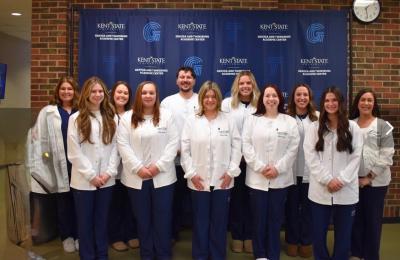
“Key benefits of these experiences include improved clinical reasoning, networking opportunities for employment, and exposure to specialized areas, which helps students clarify long-term career goals,” Myers says. “Our students are well-prepared to make career decisions with confidence by graduation, and most of our students have at least one—if not multiple—job offers before graduation.”
The regional campuses also offer paths to the 100% online RN-to-BSN program and graduate programs.
As part of Kent State’s effort to help more students persist and succeed, a new initiative in Fall Semester 2026 should help attract and retain more nursing students who juggle busy schedules. While ensuring students obtain the critical STEM foundation needed to become competent nurses, the Foundational Entry Concentration program will allow students two years to complete these classes rather than requiring them to take all the courses within their first year.
Community Impact & Service
Through clinical partnerships with hospitals, long-term care facilities, public health agencies, and community organizations across rural Northeast and Eastern Ohio in communities such as Conneaut, Geneva, Dover, Cambridge, Salem, Steubenville, and East Liverpool, Kent State Regional nursing students gain hands-on experience while helping strengthen the healthcare workforce in communities where nurses are critically needed.
"Access to quality healthcare depends on having skilled professionals who are committed to the communities they serve,” stresses Spalsbury.
“By educating nurses close to home and providing clinical experiences in rural and underserved areas, Kent State regional campuses are bolstering healthcare throughout our region.”
* The National Association of Colleges and Employers, the U.S Bureau of Labor Statistics, and ADP research
** HealthLeaders data